
Stretching is one of those simple yet powerful practices that most people overlook. Often associated only with athletes or warm-up routines, its true potential goes far beyond sports. Stretching prepares your muscles and joints for movement, improves flexibility, prevents injuries, corrects posture, and fosters a more balanced, tension-free lifestyle.
Whether you’re a competitive athlete or someone who spends long hours sitting at a desk, adding stretching to your daily routine can profoundly enhance your physical comfort and mental well-being. In this article, we’ll explore how stretching works, the different types you can practice, and how to integrate it effectively into your daily life.
The Importance of Stretching for Physical and Mental Health
The human body is made to move, but modern life—with its sedentary habits, stress, and long working hours—limits that movement and leads to stiffness. Stretching acts as a natural remedy, keeping your body functional and resilient.
1. Enhancing Flexibility and Range of Motion
Flexibility isn’t just about being able to touch your toes; it’s what allows your joints to move freely and efficiently. When your muscles are stiff, every movement feels restricted, which can eventually affect your performance and daily comfort. Regular stretching lengthens muscle fibers, improves joint mobility, and makes everyday activities—like bending, reaching, or climbing stairs—much easier.
2. Preventing Injuries and Muscle Strain
Tight muscles are more prone to tears, strains, and other injuries. Stretching keeps your tissues supple and increases blood flow, helping muscles and tendons adapt to stress more effectively. Just a few minutes of proper stretching before and after exercise can drastically reduce the risk of injury, acting as your body’s best form of preventive care.
3. Improving Posture and Relieving Muscle Pain
In today’s digital world, most people spend hours hunched over computers or phones, which causes stiffness in the neck, shoulders, and lower back. Stretching these areas regularly releases tension, corrects body alignment, and reduces pain. Over time, this habit can transform not only how you feel but also how you carry yourself.
4. Reducing Stress and Promoting Emotional Balance
Stretching benefits the mind as much as the body. Taking a few moments to focus on your breathing and body awareness helps calm your nervous system and relieve stress. It’s essentially a moving meditation that improves focus, enhances mental clarity, and supports a sense of peace and well-being.
Different Types of Stretching: Finding What Works for You
Not all stretches serve the same purpose. Understanding each type will help you design a well-rounded and effective routine.
Static Stretching
Static stretching involves holding a stretch for 15 to 60 seconds. It’s best performed after exercise when muscles are warm. Common examples include hamstring stretches (reaching for your toes), quadriceps stretches (pulling your heel toward your glutes), and shoulder stretches (bringing one arm across your chest).
Benefits: Improves long-term flexibility, releases muscle tension, and promotes recovery after workouts.
Dynamic Stretching
Unlike static stretches, dynamic stretches involve continuous, controlled movement. They mimic the motions of the activity you’re preparing for—such as leg swings, arm circles, or walking lunges.
Benefits: Boosts blood flow, raises body temperature, enhances joint mobility, and prepares your body for physical performance.
PNF Stretching (Proprioceptive Neuromuscular Facilitation)
PNF combines muscle contraction and relaxation to increase flexibility more effectively. It’s often done with a partner or under professional supervision and is popular among athletes and rehabilitation patients.
Benefits: Increases range of motion rapidly and is ideal for targeted flexibility improvements.
It may interest you: How to Naturally Strengthen Your Immune System: A Complete Guide to Disease Prevention
Video: Unlock Flexibility and Prevent Injuries!
How to Build an Effective Stretching Routine
A great stretch is less about intensity and more about consistency. Here are key principles for creating a sustainable daily practice:
- Warm up first: Never stretch cold muscles. Do five minutes of light activity—like brisk walking or gentle joint movements—before stretching.
- Time it right: Do dynamic stretches before exercise and static stretches afterward.
- Make it a daily habit: Just 10 minutes a day can transform your flexibility. Stretch in the morning, after work, or before bed.
- Listen to your body: Stretching should feel like a gentle pull, never pain.
- Stay consistent: Progress comes with repetition. Aim to stretch at least three times per week for noticeable results.
Stretching Beyond Sports: Why Everyone Should Do It
You don’t have to be an athlete to benefit from stretching. In fact, people with sedentary lifestyles need it the most.
- If you sit for long periods: Stretching your neck, shoulders, hips, and lower back relieves stiffness and improves blood flow.
- If you’re physically active: Proper technique matters. Studies show that over 60% of sports injuries stem from poor stretching habits.
- If you’re in rehabilitation: Guided stretching under professional care helps restore mobility, ease pain, and speed up recovery.
A flexible body is a youthful body. Regular stretching keeps joints healthy, muscles balanced, and movement effortless as you age.
Common Stretching Mistakes (and How to Fix Them)
- Stretching cold muscles: Always warm up first to prevent micro-tears.
- Chasing pain: A stretch should never be painful. Discomfort means you’re going too far.
- Holding your breath: Breathing deeply increases oxygen flow and helps muscles relax.
- Rushing through it: Hold each stretch for at least 20 seconds for real results.
- Inconsistency: Sporadic stretching offers little benefit—make it part of your lifestyle.
A Simple 10-Minute Daily Stretching Routine
No fancy equipment needed—just a few minutes and some space to move:
- Neck stretch: Tilt your head to one side, bringing your ear toward your shoulder. Hold for 20 seconds per side.
- Shoulder stretch: Cross one arm over your chest and gently press with the other.
- Lower back stretch: Lie on your back and pull both knees toward your chest.
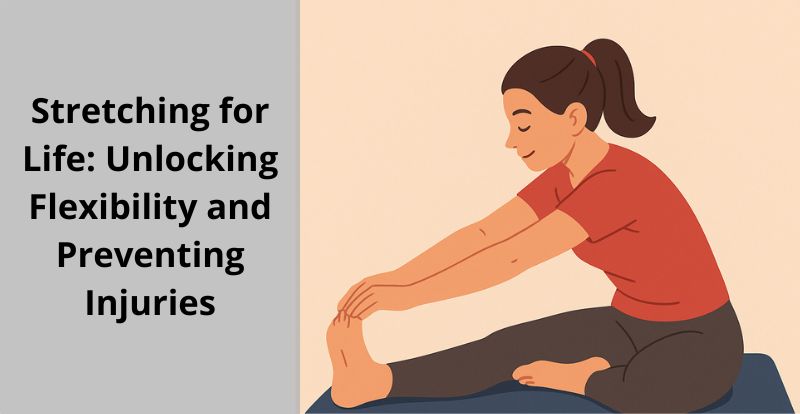
- Hamstring stretch: Sit with one leg extended, lean forward slowly, and hold.
- Calf stretch: Stand facing a wall, step one foot back, and press your heel down.
- Breathe deeply throughout the sequence and repeat twice.
This short routine can relieve stress, enhance circulation, and improve overall mobility.
When to Seek Professional Guidance
If you experience chronic pain, are recovering from an injury, or feel unsure about proper technique, consulting a physiotherapist is highly recommended. These professionals can evaluate your posture, identify muscular imbalances, and tailor a stretching plan that fits your body’s specific needs—ensuring safety and lasting results.
Conclusion
Stretching isn’t just a fitness add-on—it’s a lifelong investment in your health. It improves flexibility, prevents injuries, boosts posture, and supports mental balance. Even a few minutes a day can transform how your body feels and moves.
No matter your age or fitness level, staying flexible means staying functional. Take time each day to stretch, breathe, and reconnect with your body. It’s one of the simplest yet most powerful ways to move through life with ease and vitality.
Reference
Prof. Dr. Dr. Jan Wilke, Ph.D., Chair of Neuromotorics & Movement at University of Bayreuth
“For the first time, an international research team has developed completely evidence-based recommendations on stretching — covering when and how it makes sense for flexibility, strength and injury-risk reduction.” uni-bayreuth.de+1
About Prof. Dr. Dr. Jan Wilke:
Prof. Dr. Dr. Jan Wilke is a leading movement scientist who coordinated a global consortium of stretching experts to clarify best practices in stretching. His affiliation with the University of Bayreuth gives him high academic credibility, and his work focuses on practical applications of stretching for enhancing movement quality and reducing injury risk.