
Protein is the foundation of human nutrition. Beyond building muscles, it supports cell repair, hormone production, enzyme activity, and a balanced metabolism. Yet, one of the most discussed questions in modern nutrition remains:
Is plant protein as good as animal protein?
While animal sources have long been considered the “gold standard,” research over the past decade suggests that plant-based proteins may offer equal or even greater health benefits—especially when it comes to long-term wellness and sustainability.
Discover the real differences between plant and animal proteins. Learn what science says about their health benefits, muscle growth potential, and environmental impact — plus how to build a balanced protein strategy for long-term wellness.
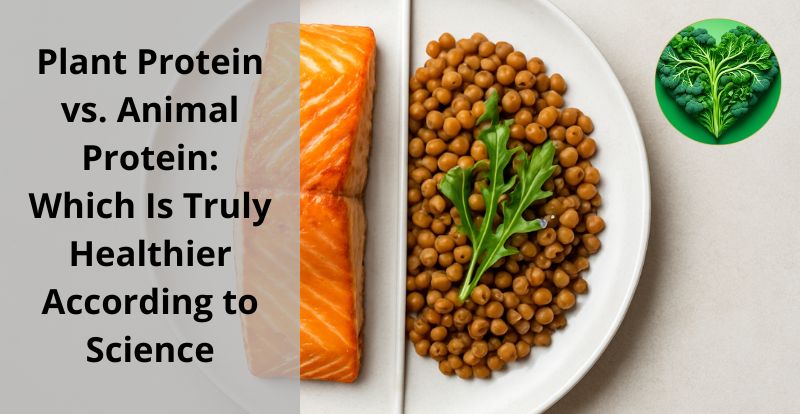
What Makes a Protein “Complete”?
The Science Behind Amino Acids
Proteins are made of amino acids — the building blocks of life. The human body needs 20 amino acids, but only 11 can be produced internally. The remaining 9, called essential amino acids, must come from food.
Animal proteins — found in meat, fish, eggs, and dairy — naturally contain all nine, making them complete proteins.
In contrast, most plant proteins lack one or more essential amino acids. However, this limitation can be easily overcome by combining different plant sources (for example, beans with rice, or chickpeas with quinoa).
According to the Harvard T.H. Chan School of Public Health, blending legumes, grains, nuts, and seeds ensures a complete amino acid profile while adding valuable nutrients like fiber, antioxidants, and phytonutrients — something animal proteins lack.
Key Nutritional Differences Between Plant and Animal Proteins
Calories, Carbs, and Macronutrients
Animal proteins typically offer more protein per calorie and fewer carbohydrates. Plant proteins, however, deliver extra fiber and beneficial phytonutrients.
Here’s a quick comparison:
- 25g of protein from chicken breast = ~120 calories
- 25g of protein from lentils = ~400 calories
- 25g of protein from peanut butter = ~600 calories
This means that for low-carb or weight-loss diets, animal protein might be more efficient. Yet, a 2022 study in Nutrients Journal found that plant proteins improve metabolic health and reduce inflammation, even when total calorie intake is higher.
Absorption and Digestibility
Animal proteins are highly bioavailable — meaning the body absorbs up to 95% of their amino acids.
Plant proteins average 70–85% due to natural antinutrients and fiber. But don’t be discouraged: soaking, fermenting, or sprouting legumes and grains can significantly improve digestibility.
Notably, soy protein stands out as a plant-based source that’s both complete and highly bioavailable.
A 2021 study in the Journal of the International Society of Sports Nutrition confirmed that athletes consuming soy achieved similar muscle growth to those taking whey protein — provided their total daily intake was sufficient.
Protein and Muscle Growth
Animal Protein Advantage — and the Plant-Based Counterpoint
Animal proteins contain higher levels of leucine, a key amino acid for muscle protein synthesis. This gives them a natural edge in muscle recovery and growth.
However, a 2020 study by Lynch et al. revealed that when total protein intake is equalized, athletes on plant-based diets experience similar strength and muscle development as those consuming animal protein.
The takeaway?
It’s not just the source — it’s the total amount and consistency of protein that matter most.
Comparing Nutrient Profiles
Animal Protein Highlights
- Vitamin B12 (crucial for nerve and blood health)
- Heme iron (easily absorbed)
- Zinc and vitamin D
- Long-chain omega-3 fatty acids (EPA and DHA)
Plant Protein Highlights
- Dietary fiber (supports digestion and gut microbiota)
- Antioxidants and phytochemicals (reduce oxidative stress)
- Magnesium, potassium, and vitamin C
- Naturally cholesterol-free and low in saturated fat
For those on plant-based diets, it’s essential to supplement vitamin B12, iron, and omega-3s to maintain optimal health.
Meanwhile, cutting back on processed meats like bacon and sausages — which the World Health Organization classifies as carcinogenic — significantly lowers the risk of colorectal cancer and heart disease.
Longevity and Chronic Disease Prevention
What Long-Term Studies Reveal
A 2020 JAMA Internal Medicine meta-analysis showed that replacing animal protein with plant protein reduces all-cause mortality and cardiovascular deaths.
The effect is especially strong when substituting red and processed meats with tofu, beans, lentils, or nuts.
For older adults, a higher protein intake — around 1.2–1.5 grams per kilogram of body weight — supports muscle maintenance and vitality, regardless of the source.
Environmental Impact and Sustainability
Animal agriculture contributes significantly to greenhouse gas emissions, particularly methane. However, some experts, such as Frank Mitloehner from the University of California, Davis, argue that regenerative grazing systems can offset part of these emissions.
Still, the World Resources Institute (2022) reported that replacing even half of global meat consumption with legumes could reduce agricultural emissions by 25%, while saving vast amounts of land and water.
In short, plant-based proteins aren’t just healthier — they’re also more sustainable for the planet.
Building a Balanced Protein Strategy
Practical Tips for Everyday Eating
- Mix and match sources: Combine lean animal proteins (like fish or eggs) with legumes, nuts, and grains.
- Limit processed meats: Choose natural, unprocessed cuts instead of sausages or deli meats.
- Aim for balance: Ideally, 50% or more of your total protein should come from plants.
- Supplement wisely: If you’re vegan, use fortified foods or supplements for vitamin B12 and omega-3s.
Conclusion — The Power of Balance
Both plant and animal proteins have undeniable benefits.
Animal sources deliver high bioavailability and complete amino acid profiles, while plant sources promote heart health, longevity, and sustainability.
The healthiest diet isn’t about choosing one over the other — it’s about finding your balance.
A diet centered on natural, minimally processed foods, rich in diverse protein sources, will always be your best ally for long-term health and vitality.
It may interest you: 7 Essential Vitamins and Minerals That Boost Your Energy and Keep You Healthy
Video: The Truth About Animal vs. Plant Protein Quality | Alan Aragon & Dr. Andrew Huberman
Frequently Asked Questions (FAQ)
1. Can I build muscle with plant protein?
Yes. When consumed in the right amount and variety, plant proteins like soy, lentils, and pea protein can fully support muscle growth.
2. Is it unhealthy to stop eating animal protein?
Not at all, as long as you include vitamin B12 and omega-3 supplements. A well-planned vegan diet can meet all protein requirements.
3. Which plant proteins are complete?
Soy, quinoa, amaranth, buckwheat, and hemp seeds are all complete plant-based proteins.
4. How much protein do I really need?
For most adults: 1 to 1.5 grams per kilogram of body weight per day, depending on activity level and goals.