
Discover how to balance dopamine naturally to boost motivation, focus, and happiness through mindful habits, nutrition, and real connection.
Today, nearly everything is designed to give us instant pleasure — a notification, a new episode, or a quick scroll on our phone. Without realizing it, we’ve become addicted to fast gratification. This constant flood of stimulation disrupts one of the brain’s most powerful chemicals: dopamine.
Dopamine regulates motivation, learning, pleasure, and mental energy. But when overstimulated, the brain loses sensitivity, requiring more and more to feel the same satisfaction. Understanding and balancing dopamine levels is essential for regaining focus, enjoying simple moments, and living a more fulfilling life.
It may interest you: 7 Paths to Inner Calm: How to Build Lasting Peace from Within
Video: Improve Your Baseline Dopamine for Motivation & Drive | Dr. Andrew Huberman
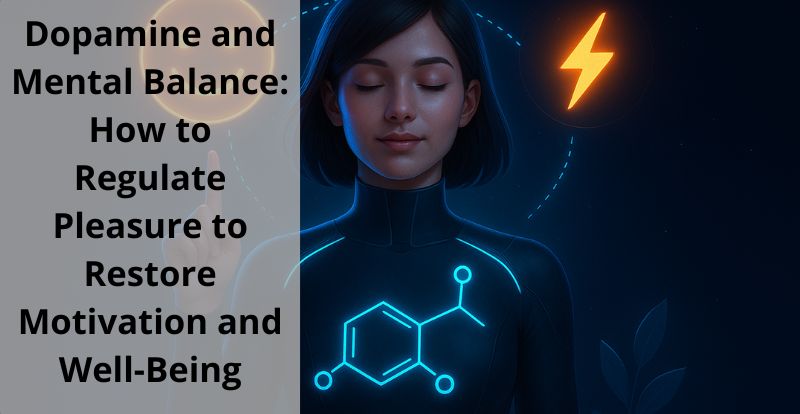
What Is Dopamine and What Does It Really Do?
Dopamine is a multifunctional neurotransmitter — a chemical messenger that transmits signals between neurons, influencing motivation, mood, movement, learning, and reward.
Often called the “pleasure molecule,” dopamine’s true purpose goes beyond pleasure itself. Its key role is anticipation — it drives us to act, pursue goals, and repeat behaviors the brain associates with reward.
Research by Wolfram Schultz, a neuroscientist at the University of Cambridge, shows that dopamine spikes particularly when a reward is unexpected. The brain reacts more to surprise and novelty than to predictable results. This explains why new and unpredictable experiences capture our attention so easily.
When the System Goes Off Balance: The Risks of Excess Dopamine
In today’s world — surrounded by screens, social media, fast food, and endless entertainment — it’s easy to trigger dopamine artificially hundreds of times a day.
According to psychiatrist Anna Lembke, author of Dopamine Nation (Stanford University), we live in a “hyper-dopaminergic society,” where pleasure is so abundant and immediate that the brain no longer has time to self-regulate. She uses the metaphor of the hedonic balance: every moment of pleasure generates a small counter-reaction of discomfort as the brain tries to restore equilibrium. If we repeat the same pleasurable stimulus too often, the balance tips permanently toward dissatisfaction and emotional flatness.
This mechanism explains why many people feel bored, anxious, or unmotivated even when surrounded by things they used to enjoy. The brain becomes desensitized to natural pleasures — like reading, talking, or being outdoors — and dependent on intense, short-term stimuli.
The Myth of “Dopamine Fasting”: What Really Works
The term dopamine detox has gained popularity online, but the truth is that you can’t actually remove dopamine from your body — it’s essential for survival.
What you can do, however, is reduce the external triggers that overstimulate it, allowing the brain to regain its natural sensitivity. Lembke suggests treating it as a conscious pause rather than a literal detox. The idea is simple:
- Identify one addictive habit (e.g., social media, sugar, or gaming).
- Pause it for 7 to 30 days.
- Replace it with activities that are calmer but meaningful — reading, walking, meditating, or real conversation.
The goal is not to suppress pleasure but to retrain your reward system to find satisfaction in sustainable, real-world experiences.
How to Balance Dopamine Naturally
Balancing dopamine isn’t about deprivation — it’s about cultivating habits that generate genuine, lasting satisfaction. Below are evidence-based ways to regulate it naturally:
1. Regular Physical Exercise
Movement is one of the most powerful ways to boost dopamine naturally. Running, swimming, yoga, or brisk walking improve brain circulation, reduce stress, and promote feelings of accomplishment.
Exercise also releases serotonin and endorphins, creating a stable emotional balance and enhancing overall brain health.
2. Meditation and Mindfulness
Daily mindfulness or meditation trains the brain to enjoy the present moment and reduces dependence on external stimuli. These practices encourage steady, moderate dopamine release while lowering anxiety and stress.
Neuroscientist Kent C. Berridge has shown that pleasure depends as much on awareness and meaning as on brain chemistry — the more mindful we are of an experience, the more deeply we enjoy it.
3. Nutrition That Supports Dopamine
A diet rich in quality proteins, omega-3 fatty acids, and micronutrients helps maintain healthy dopamine levels.
Foods like eggs, salmon, nuts, seeds, bananas, and avocados contain tyrosine, an amino acid that serves as a dopamine precursor.
Meanwhile, refined sugar, ultra-processed foods, and excess caffeine cause sharp spikes and crashes that disrupt its balance.
4. Real and Meaningful Social Connection
Face-to-face interactions — laughing, sharing stories, helping others — trigger a balanced release of dopamine along with oxytocin and serotonin.
Prioritizing authentic relationships over digital validation helps restore the brain’s natural reward pathways.
5. Cognitive Challenges and Lifelong Learning
Dopamine surges when we overcome challenges or achieve goals. Learning a language, playing an instrument, solving puzzles, or completing a project provides small but powerful hits of motivation.
Such activities enhance neuroplasticity and protect cognitive health over time.
6. Restorative Sleep and Downtime
Sleep is critical for dopamine regulation. During deep rest, dopamine receptors recover sensitivity, which explains why sleep deprivation leads to apathy, irritability, and impulsive behavior.
Keeping a consistent sleep schedule and avoiding screens before bedtime can help reset your brain’s natural rhythm.
A Practical 7-Day Dopamine Balance Plan
- Day 1: Track your digital habits — how often do you check your phone without purpose?
- Day 2: Move your body for at least 30 minutes.
- Day 3: Practice 10 minutes of mindful breathing or guided meditation.
- Day 4: Challenge your brain — learn something new or solve a puzzle.
- Day 5: Connect in person with someone you value — no screens involved.
- Day 6: Adjust your meals — add protein, reduce sugar.
- Day 7: Reflect — which activities brought you genuine satisfaction?
In just a few weeks, you’ll likely notice that simple pleasures regain their depth: a walk, a book, or a quiet talk feels more rewarding.
Conclusion: Dopamine in Harmony, Life in Balance
Dopamine is not your enemy — it’s an ally when used wisely. The goal isn’t to eliminate pleasure but to restore your natural ability to enjoy it consciously.
As Dr. Anna Lembke reminds us, real happiness comes not from endless stimulation but from meaning, moderation, and awareness.
By rebalancing your dopamine system, you can reclaim motivation, clarity, and genuine joy in everyday life.