
Between tradition, science, and testimonies that inspire hope Nature holds mysteries that continue to surprise both modern science and those who trust in traditional medicine.
One of these enigmas is the African Milk Bush (Synadenium grantii), a plant regarded in various parts of the world as a gift of the earth due to its many properties. From it comes a preparation known as “The Water of Life”, obtained from its latex, which for many has meant relief and hope in the face of chronic illness.
In this article, we’ll present a complete vision: on one hand, what scientific studies say about the plant; on the other, the personal stories of those who have tried The Water of Life and claim to have experienced remarkable improvements.
It may interest you: Plant of Life (Synadenium grantii): The Natural Treasure with Remarkable Healing Properties
Video: African Milk Tree – The Tree of Life – Reproduction
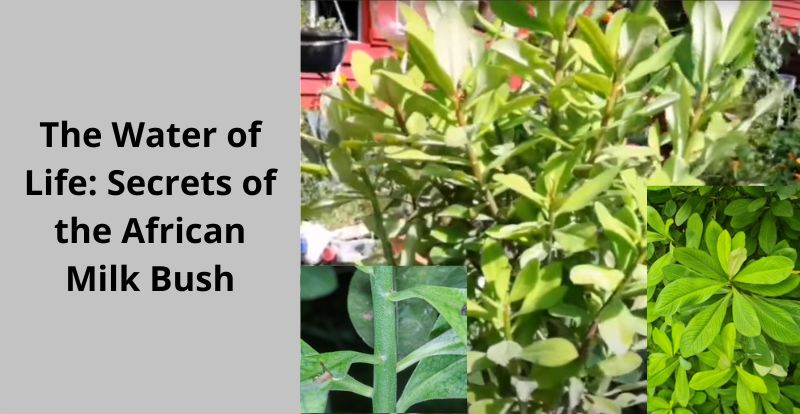
The African Milk Bush: a botanical jewel
The Synadenium grantii, better known as the African Milk Bush, belongs to the Euphorbiaceae family and is characterized by its sturdy stems, fleshy leaves, and a white latex that contains bioactive compounds of great interest to science. Its origin lies in warm regions of Africa, although today it is cultivated in various places for both ornamental and medicinal purposes.
Visually, it is an exotic plant that can grow up to three meters tall, with green leaves edged in red, making it a striking decorative element. Yet its greatest value lies in its milky latex, a substance used since ancient times as a folk remedy for inflammatory conditions and gastric problems.
The latex of the African Milk Tree can cause severe irritation to the skin and eyes, leading to redness, burning, and even injuries upon direct contact. Therefore, it is essential to wear gloves, protective glasses, and appropriate clothing when handling this plant, and to avoid touching your face or eyes during the process to prevent accidents and adverse reactions.
In the specialized market, a specimen of the African Milk Bush can cost around $50,000, reflecting both its rarity and the increasing demand among those seeking plants with medicinal and ornamental value.
“The Water of Life”: tradition and preparation
You may be wondering: why is it called The Water of Life? The answer lies in the particular way this drink is prepared and in the testimonies of those who consider it a miraculous natural resource.
The preparation takes place at a very specific time: at dawn, when a syringe is used to extract drops of the plant’s latex. These drops are then diluted in water in exact proportions, creating what is popularly known as The Water of Life.
This liquid looks nothing like ordinary water. Its appearance is slightly cloudy, with visible traces of latex; its smell is far from pleasant, and its taste leaves a prickling sensation in the throat. First-time users often report temporary discomforts such as gas, stomach burning, or stronger urination during the first week of consumption. Yet many say that the body adapts with time, and that the benefits far outweigh the initial inconveniences.
Testimonies that make a difference
Beyond theory, it is the real-life experiences that have given The Water of Life its reputation as a powerful natural remedy. Among the most widely shared accounts are:
- Kidney stones and prostate inflammation: a family member who was hospitalized with kidney stones and an inflamed prostate began drinking this water after being discharged. In just three weeks, the results were striking: he expelled the stones, and the prostate inflammation subsided. What had seemed like a long path of pain turned into an unexpected recovery.
- The fight against diabetes: a diabetic individual, who had even lost his vision due to the disease, explained that The Water of Life became his “time water.” He takes it intermittently, alternating with rest periods, and says it has given him strength to keep going. While it does not replace his medication, he claims this drink has helped him stabilize and continue fighting his illness.
- Pulmonary fibrosis: one of the most striking stories comes from a patient who had been given only two years to live after being diagnosed with pulmonary fibrosis. His decline was progressive until he decided to complement his treatment with The Water of Life. Three months later, doctors noticed something unusual: the lung damage had stopped progressing, and his overall mood improved dramatically. “I no longer feel like I’m on a countdown,” he said with renewed hope.
These testimonies, though personal and not scientific, reflect the faith and trust people place in this ancestral preparation. For many, it represents a second chance when conventional options seem limited.
Science and tradition: a necessary dialogue
Although personal stories are powerful, science has also taken an interest in the compounds of the African Milk Bush. Recent studies have identified several promising properties:
- Anti-inflammatory and antiviral action: the latex contains molecules that reduce inflammation and have shown the ability to inhibit certain viruses.
- Anticancer potential: laboratory tests have revealed that extracts of the plant have cytotoxic effects on tumor cells, making it a promising candidate for future cancer research.
- Gastric protection: research in Brazil confirmed that the latex can reduce gastric lesions caused by substances such as ethanol, validating its traditional use for stomach ailments.
The balance between tradition and science is not easy, but it may open new doors in the development of natural therapies.
Necessary precautions
Enthusiasm should not overshadow caution. The latex of the African Milk Bush can be irritating or toxic if not handled correctly. For this reason, it is crucial to follow some basic guidelines:
- Do not consume it without proper guidance.
- Wear gloves when handling the plant to avoid skin irritation.
- Keep it away from children and pets.
- Respect popular dosage practices and never exceed them.
Initial effects such as stomach burning or throat irritation are signs that the body is reacting to a potent compound. Therefore, the key lies in responsible and mindful use.
More than a plant, a symbol of hope
The African Milk Bush is far more than an exotic ornament: it is a symbol of resilience and hope. Its role in the preparation of The Water of Life has turned it into a resource that connects ancestral wisdom with modern scientific curiosity.
Although there is still much research to be done, the stories of those who have found relief in this water reinforce the idea that nature still holds answers we are only beginning to discover.
With a market price of around $50,000, this plant is both a botanical treasure and a potential ally in the pursuit of well-being.
Conclusion
The Water of Life is more than an unusual drink: it is the expression of faith in nature and humanity’s determination to find alternatives in the face of adversity.
For some, it is an unpleasant beverage, with a strange taste and bothersome side effects; for others, it has been the beginning of an unexpected recovery. What is certain is that the African Milk Bush (Synadenium grantii) continues to open doors between traditional knowledge and modern research.
Ultimately, this plant reminds us that health is not always found only in laboratories or pharmacies, but also in the roots, leaves, and resins that the earth generously offers. For those who believe in it, The Water of Life is a bridge between human fragility and the inexhaustible strength of nature.